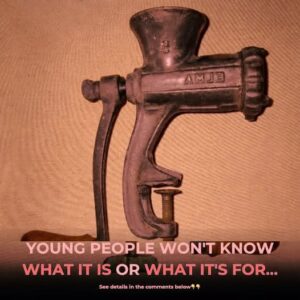
The discovery of an unfamiliar metal tool in an old kitchen drawer sparked widespread online curiosity, leading many to initially mistake the rugged, pointed implement for a dangerous object before it was identified as a traditional puncture-style can opener. Unlike modern rotary openers that create smooth edges, this vintage design required users to manually pierce the metal lid and work around the edge one puncture at a time, demanding significant force and careful hand control. The tool’s appearance and the manual effort it required served as a stark reminder of how kitchen routines have shifted over the decades from physically demanding tasks to more convenient, user-friendly processes.
For many older adults, the image of the tool evoked strong nostalgia, recalling memories of family kitchens, childhood meals, and learning practical skills from parents or grandparents. While some shared stories of accidentally cutting their fingers, others remembered their elders using the device with practiced ease. This reflection highlighted how household tools in the past often prioritized durability over the comfort and safety features that have since become standard in modern kitchen equipment.
The discussion also emphasized the significant evolution of kitchen safety, as modern tools now frequently feature ergonomic handles, protective guards, and improved mechanisms to prevent common injuries. Decades ago, households routinely used items that required heightened caution, such as mandoline slicers without guards, heavy cast-iron cookware, and knives stored without protection. This contrast between vintage utensils and contemporary design shows how decades of experience and engineering improvements have made food preparation faster, safer, and more accessible for everyone.
Ultimately, the puncture-style can opener serves as a meaningful symbol of changing technology and family tradition. While these once-common tools have largely disappeared from everyday use as kitchens have become more efficient, they remain reminders of the resourcefulness of previous generations. Looking back at such objects allows us to appreciate both the craftsmanship of the past and the innovations that have made the modern kitchen a more convenient and secure environment.